Exaud Blog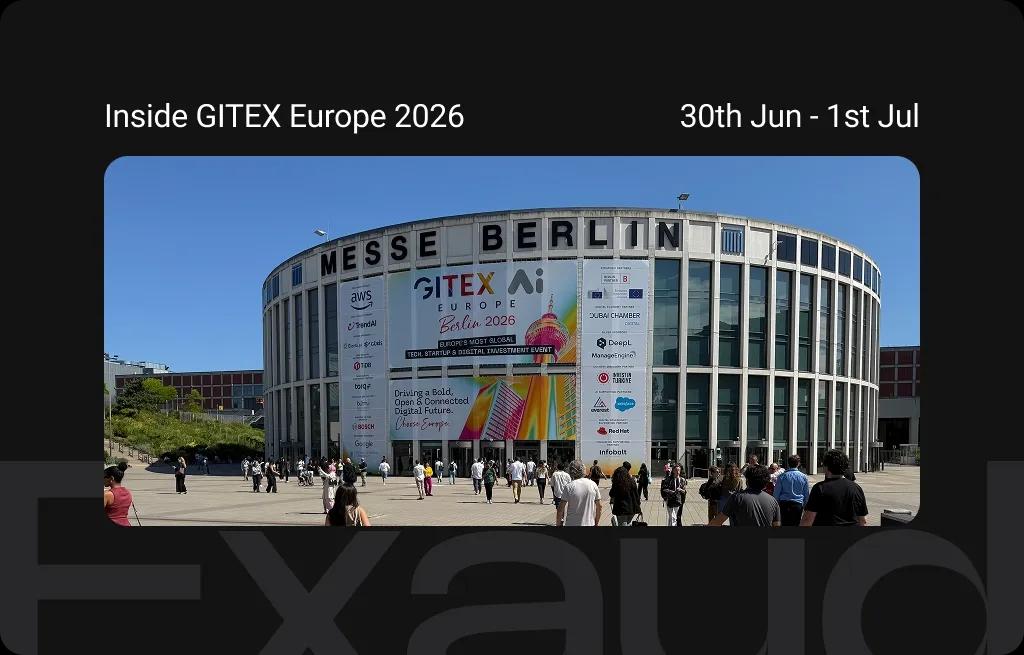
Blog
Inside GITEX Europe 2026
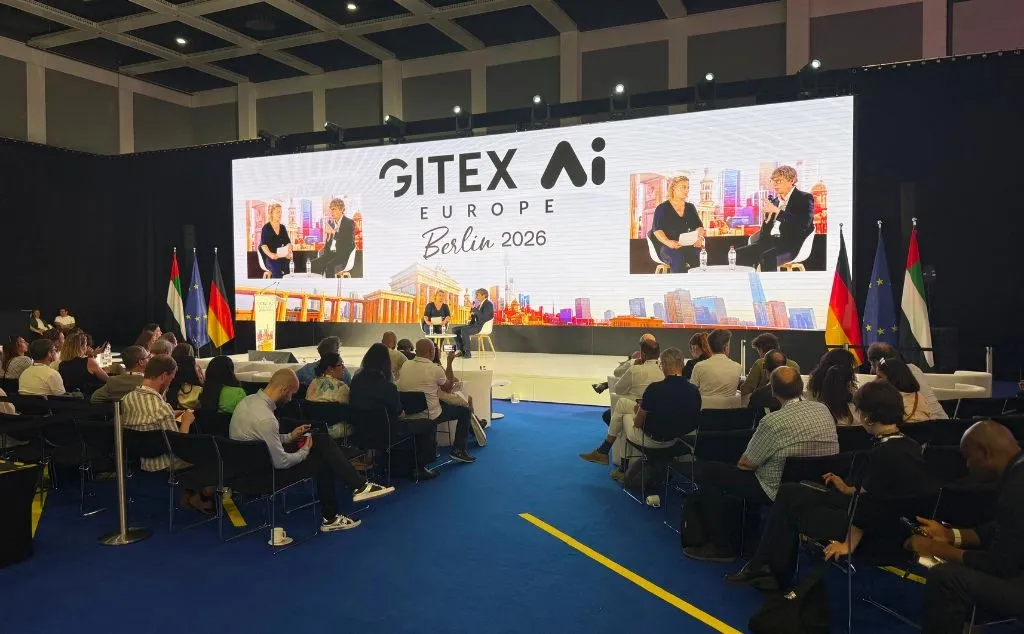
AI, quantum computing, and industrial innovation defined the agenda at GITEX Europe 2026. Explore the technological developments shaping enterprise transformation as organizations transition from AI experimentation to scalable, production-grade implementations.Posted onby ExaudThe inaugural edition of GITEX AI Europe brought together thousands of technology leaders, innovators, startups, investors, and enterprise decision-makers in Berlin, confirming Europe’s growing role in the global AI ecosystem. With more than 1,400 exhibitors and participants from over 100 countries, the event showcased not only emerging technologies but also a clear shift toward practical AI adoption across industries.
Exaud was proud to be part of GITEX Europe 2026, engaging with business and technology leaders to discuss how AI can be successfully integrated into real-world products, operations, and enterprise systems.
From AI Hype to AI Delivery
One of the strongest themes throughout GITEX was the industry’s transition away from asking whether AI should be adopted toward understanding how to implement it successfully. Across keynote sessions, technical demonstrations, and conversations on the exhibition floor, several priorities consistently emerged:
-Deploying AI securely within existing enterprise environments
-Combining AI with edge computing for real-time decision making
-Building trustworthy AI systems with strong governance
-Integrating AI into existing software rather than replacing entire infrastructures
-Scaling successful pilots into enterprise-wide deployments
This evolution reflects what we see every day when working with customers. Organizations are no longer looking for isolated AI experiments, they want solutions that generate measurable business outcomes.
Quantum Is Real and Quietly Becoming a Business
One of the more striking takeaways from GITEX was how far quantum technologies have moved beyond the lab. This was not a hall of research posters and ten-year roadmaps but actual startups and mature enterprises presenting working, revenue-generating applications.
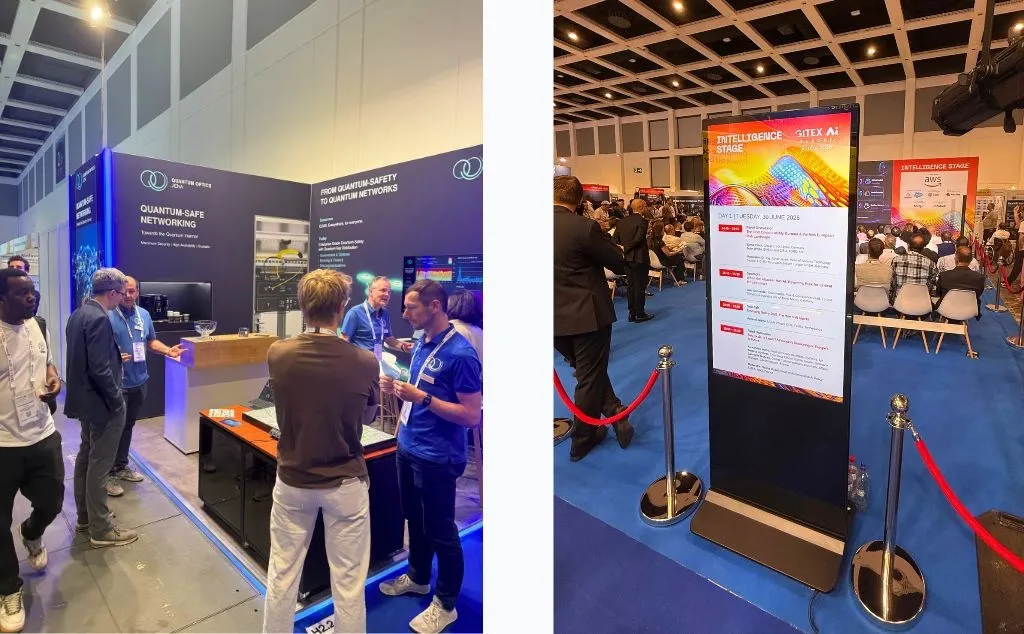
On the security side, we saw photon-based quantum encryption solutions delivered over standard fiber-optic infrastructure, already being purchased by German banks and other institutions preparing for the threat to classical cryptography.
On the computing side, companies demonstrated molecular modelling for chemistry and pharma, and simulation workloads for automotive design and testing - problems where even today's early-stage quantum hardware, combined with hybrid quantum-classical approaches, delivers genuine value.
The common thread: these are no longer science projects, but companies that have built sustainable businesses on quantum.
Equally valuable were the conversations. We held productive meetings with members of QuantumBW, the innovation initiative that pools quantum technology expertise across the German state of Baden-Württemberg. We also connected with leading providers of quantum software and services, including Classiq, founded back in 2020 platform that lets designing quantum algorithms at a high level of abstraction - exactly the kind of tooling layer that allows engineering teams, ours included, to build on quantum hardware as it matures.
For software engineering companies, the signal is clear: quantum is entering the phase where the bottleneck shifts from physics to software integration, validating Exaud’s early focus on applied quantum solutions.
Industrial AI Takes Center Stage
Manufacturing, logistics, automotive, healthcare, and critical infrastructure were among the sectors demonstrating some of the most mature AI applications.
Instead of focusing solely on generative AI, exhibitors highlighted practical implementations including predictive maintenance, intelligent automation, computer vision, industrial IoT, digital twins, and embedded AI running directly on connected devices.
For engineering-focused companies like Exaud, this is particularly significant. Successful AI projects increasingly require expertise that extends beyond machine learning models. They depend on robust software engineering, embedded systems, cloud infrastructure, data integration, cybersecurity, and scalable architectures working together. AI is becoming another layer of modern software engineering, not a standalone technology.
Europe’s Growing Focus on AI Sovereignty
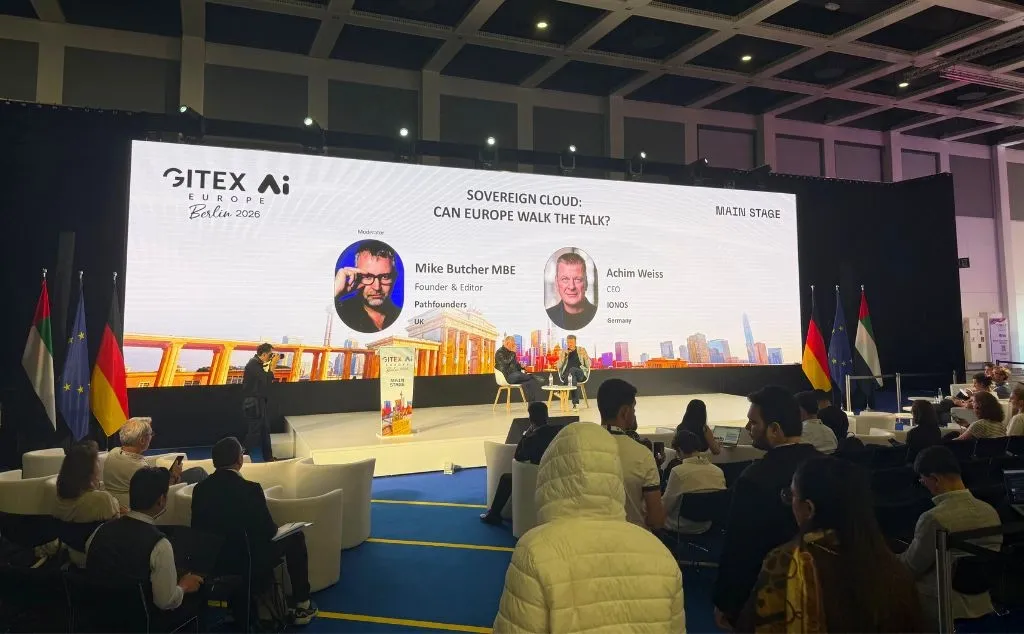
Another major discussion centered around digital sovereignty and Europe’s ambition to build AI capabilities that balance innovation with security, transparency, and regulatory compliance.
Conference tracks explored topics including sovereign AI infrastructure, cybersecurity, quantum technologies, cloud platforms, and responsible AI deployment. The message was clear: organizations are seeking AI solutions they can trust, govern, and operate over the long term rather than simply adopting the latest models.
Conversations That Matter
Beyond the conference sessions, one of the greatest values of GITEX was the opportunity to engage directly with businesses facing real operational challenges.
Many conversations revolved around familiar questions:
-How do we identify the right AI opportunities?
-Which processes should be automated first?
-How can existing systems be modernized without disrupting operations?
-How do we ensure AI projects remain scalable as requirements evolve?
These discussions reinforce an important reality: successful AI adoption begins with understanding business problems before selecting technologies. Technology alone rarely creates competitive advantage yet well-designed solutions that address genuine operational requirements do.
Related Posts
Subscribe for Authentic Insights & Updates
We're not here to fill your inbox with generic tech news. Our newsletter delivers genuine insights from our team, along with the latest company updates.