Retail Logistics Optimization: Building High-Performance Operations
A practical perspective on how a structured, end-to-end approach can turn retail logistics into a key driver of performance and competitive advantage.Posted onby Exaud
Sharing practical insights from industry experts is part of how we support the organizations we work with. This article, developed by the team at Kaizen Institute, brings a structured perspective on one of the most critical areas in modern retail: logistics.
In this piece, they explore how retail logistics is evolving in response to increasing complexity, rising customer expectations, and the growth of omnichannel models. More importantly, they outline how a structured, end-to-end approach can transform logistics from a traditionally cost-focused function into a strategic driver of performance, resilience, and customer satisfaction.
Retail Logistics Optimization: Building High-Performance Operations
At Kaizen Institute, we have spent more than four decades helping organizations to achieve world-class performance through continuous improvement. Established in 1985, Kaizen Institute was the first consultancy firm to promote KAIZEN™ and Lean methodologies outside of Japan. We support companies in building and sustaining a culture of continuous improvement. The Kaizen approach is applied across all sectors, including retail logistics, where volatility, complexity, and customer expectations are constantly increasing.
Retail logistics has become one of the most important functions in modern retail. Rapid growth in e-commerce and omnichannel fulfillment models, coupled with same-day delivery expectations and frequent demand fluctuations, has transformed supply chains into highly dynamic ecosystems. What was once a back-end, cost-focused operation is now a decisive factor in customer experience, working capital performance, and competitive differentiation.
Adopting a Kaizen approach shifts the focus of retail logistics from reactive problem-solving to structured, continuous improvement. Rather than optimizing individual processes, the focus is on end-to-end flow, cross-functional alignment, and performance management systems that prevent recurring issues. By eliminating waste, improving visibility, and developing capabilities at every level of the organization, logistics operations evolve from being a constant source of pressure to becoming a reliable driver of performance.
The retail logistics challenge has changed
Retail logistics management has fundamentally evolved. For years, success was measured primarily by cost efficiency: reducing transportation expenses, optimizing warehouse space, and minimizing inventory levels. While cost control remains important, agility has become equally critical. Retailers must now respond quickly to demand volatility, promotional peaks, seasonal shifts, and supply disruptions, requiring more dynamic replenishment planning and tighter coordination across the supply chain. Speed and flexibility are no longer advantages; they are requirements.
At the same time, the growth of e-commerce and omnichannel models has significantly increased operational complexity. Fragmented order profiles, smaller shipment sizes, and multi-node fulfillment networks require real-time visibility and tight cross-functional coordination. Logistics is no longer a back-end function. It directly shapes the customer experience.
In this environment, traditional, silo-based optimization no longer delivers sustainable results. Isolated improvements may solve immediate issues, but often shift constraints elsewhere. Retail organizations need an integrated, end-to-end approach that replaces reactive firefighting with structured, continuous improvement.
Core pillars of retail logistics optimization
Sustainable retail logistics optimization requires a structured framework that addresses the entire value stream, from inbound supply to final customer delivery, while building the organizational capabilities needed to sustain improvement over time. The following pillars form the foundation of high-performance retail logistics systems.
End-to-end value stream visibility
True logistics optimization for retail begins with a clear, end-to-end understanding of how value flows through the organization. Value Stream Analysis (VSA) provides a structured methodology to achieve this visibility.
An effective VSA requires a cross-functional team composed of leaders responsible for the organization's key logistics processes and related operational areas. Participants should bring deep knowledge of current operations, strong analytical capabilities, openness to change, and the authority to support decisions.
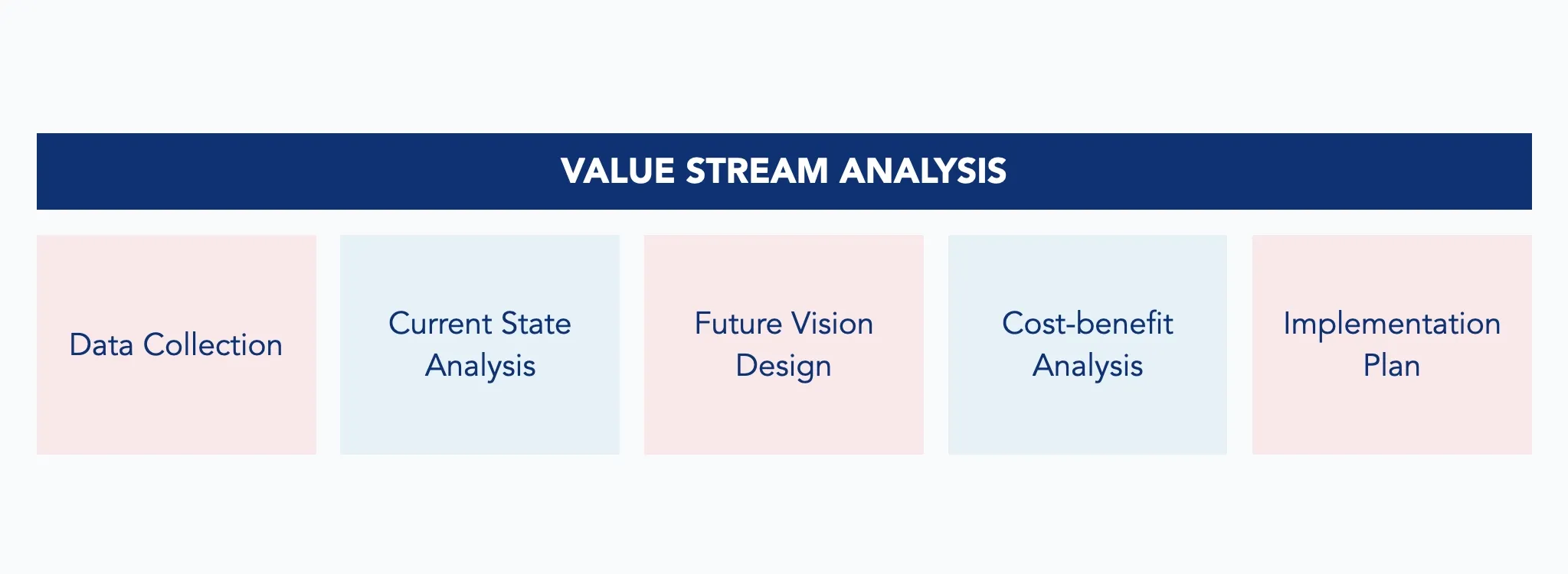
First, comprehensive data collection ensures that decisions are grounded in facts rather than assumptions. Next, a Current State Analysis maps material and information flows to identify bottlenecks, redundancies, variability drivers, and performance gaps. Based on these insights, the team defines a Future Vision Design that aligns logistics flows with strategic objectives.
A cost-benefit analysis then evaluates the financial and operational impact of proposed improvements, ensuring feasibility and prioritization. Finally, a detailed implementation plan translates the future-state design into actionable initiatives, clear responsibilities, timelines, and measurable targets.
By combining cross-functional expertise with a disciplined methodology, end-to-end supply chain visibility enables organizations to move beyond fragmented optimization. It enables systemic improvements that enhance flow, reduce waste, and create a stable foundation for continuous performance gains.
Figure 1: Value Stream Analysis (VSA) structure
Warehouse optimization
Warehouses are central nodes in retail logistics networks and represent a critical balance between cost, speed, and service. Achieving process excellence requires a holistic approach that integrates facility design, flow management, and operational control.
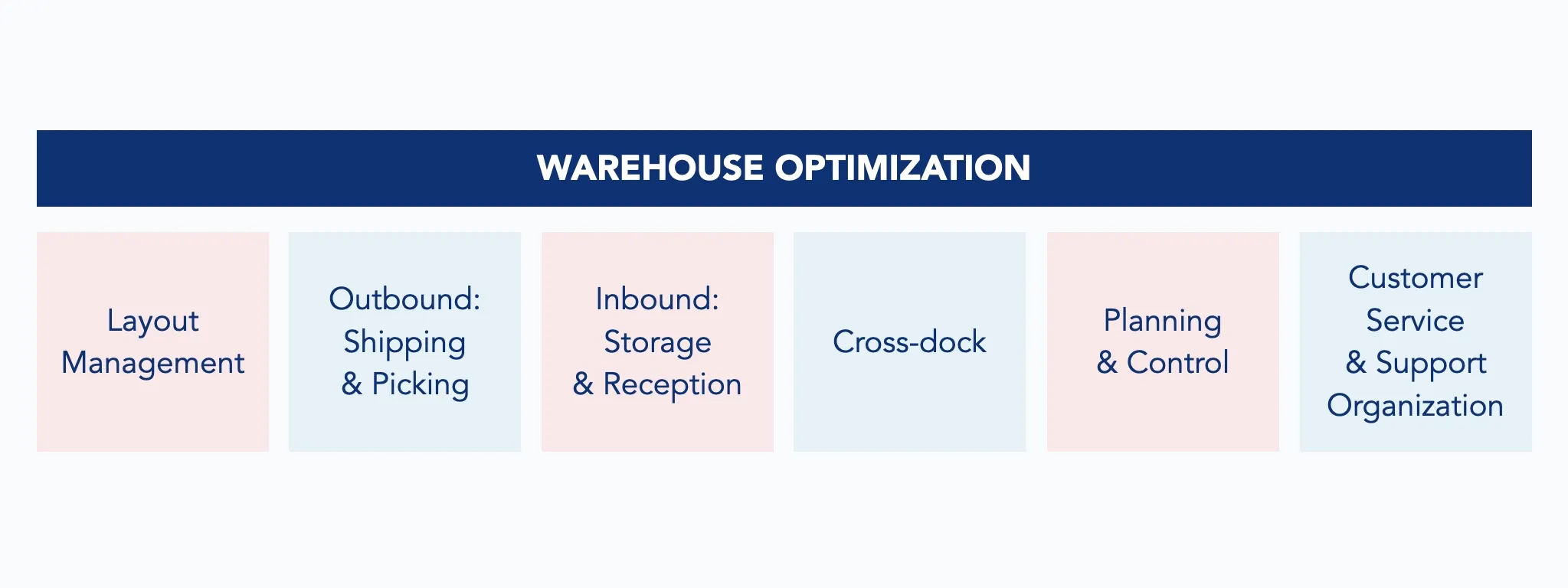
It begins with warehouse design. Layout configuration, material flow logic, storage systems, and equipment selection must support demand variability, Stock Keeping Unit (SKU) diversity, and service requirements. Product positioning should reflect turnover rates, order profiles, and handling characteristics to minimize travel time and operational waste. Poorly designed facilities create structural inefficiencies that no operational adjustments can fully overcome.
Inbound processes, including receiving, quality control, storage allocation, and put-away, must be standardized and synchronized to prevent congestion and inventory inaccuracies. Outbound operations, particularly picking and shipping, require optimized routing, workload balancing, and error-proofing mechanisms to ensure both productivity and service reliability. Picking strategies must be adjusted to demand profiles to maintain efficiency.
In more advanced environments, cross-docking strategies can reduce storage needs and accelerate flow, but they demand high planning accuracy and disciplined execution.
Planning and control systems form the backbone of warehouse stability. Clear capacity planning, daily performance monitoring, and visual management routines ensure deviations are detected early and corrective actions are implemented quickly. Finally, close alignment with customer service and support functions ensures operational decisions consistently reflect service-level commitments.
When design, processes, planning, and people are aligned, warehouses shift from operational bottlenecks to high-performance fulfillment engines within the retail network.
Figure 2: Main pillars of warehouse optimization
Transport and last-mile optimization
Transportation is often one of the largest cost components in retail logistics. Effective optimization requires balancing cost efficiency, service reliability, and operational discipline across the entire transport network.
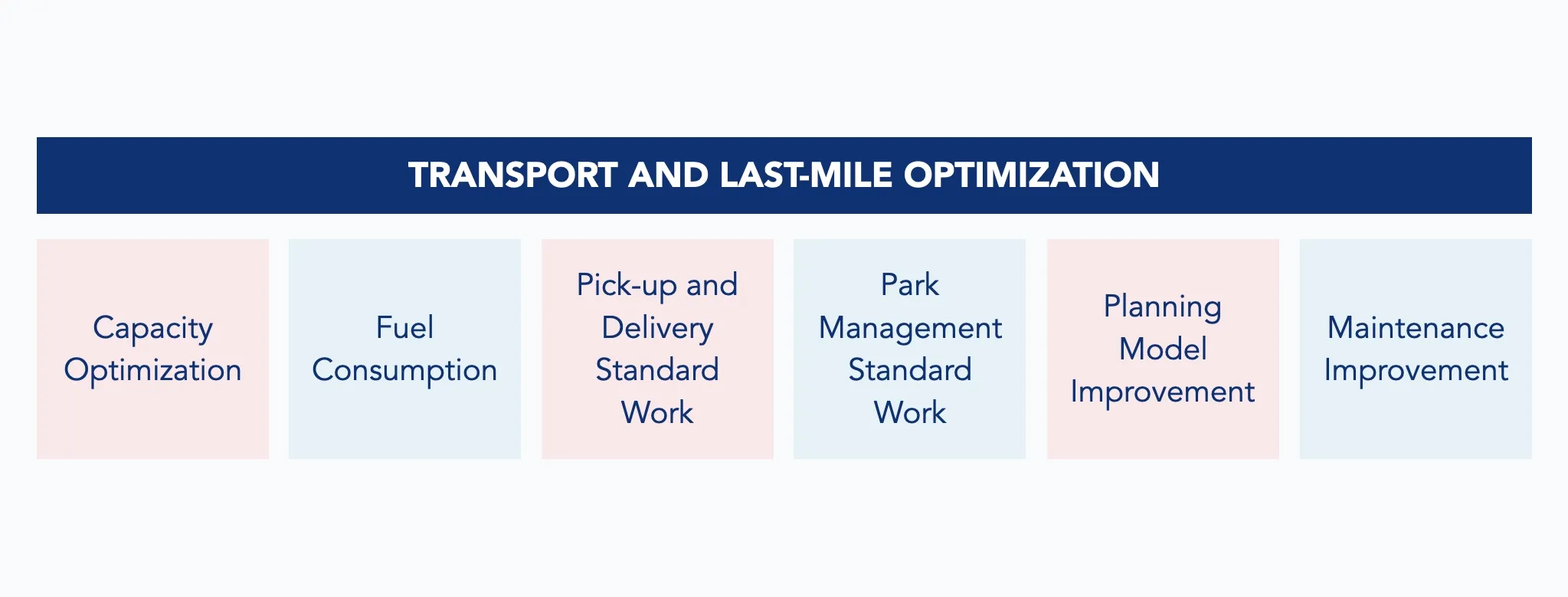
Capacity optimization is a primary lever. Maximizing vehicle utilization, improving load consolidation, and aligning fleet size with demand variability reduce unnecessary trips and idle time. At the same time, fuel consumption must be actively managed through route optimization, driving standards, and vehicle performance monitoring, directly impacting both cost and sustainability targets.
Pick-up and delivery processes also require standardization. Clear service windows, structured dispatch routines, and standardized loading and unloading procedures reduce variability and improve reliability. Establishing standard work across transport operations, including fleet management, ensures consistency in scheduling, vehicle allocation, and daily performance tracking.
The last mile, however, introduces a different level of complexity. Smaller order sizes, tighter delivery windows, urban congestion, and rising customer expectations demand highly responsive planning models. Dynamic routing, real-time visibility, shipment tracking, and rapid exception management become critical. In this phase, logistics performance directly shapes customer satisfaction and brand perception.
Further improvements to the planning model enhance network performance. Advanced routing logic, dynamic re-planning capabilities, and integrated demand forecasting increase responsiveness without compromising efficiency. In parallel, maintenance optimization plays a critical role: preventive maintenance planning reduces breakdowns, improves asset availability, and stabilizes service levels.
When capacity management, standardized processes, planning models, and maintenance systems are aligned, transport and last-mile operations shift from being cost-heavy and reactive to becoming predictable, efficient, and customer-focused performance drivers.
Figure 3: Transportation and last-mile optimization
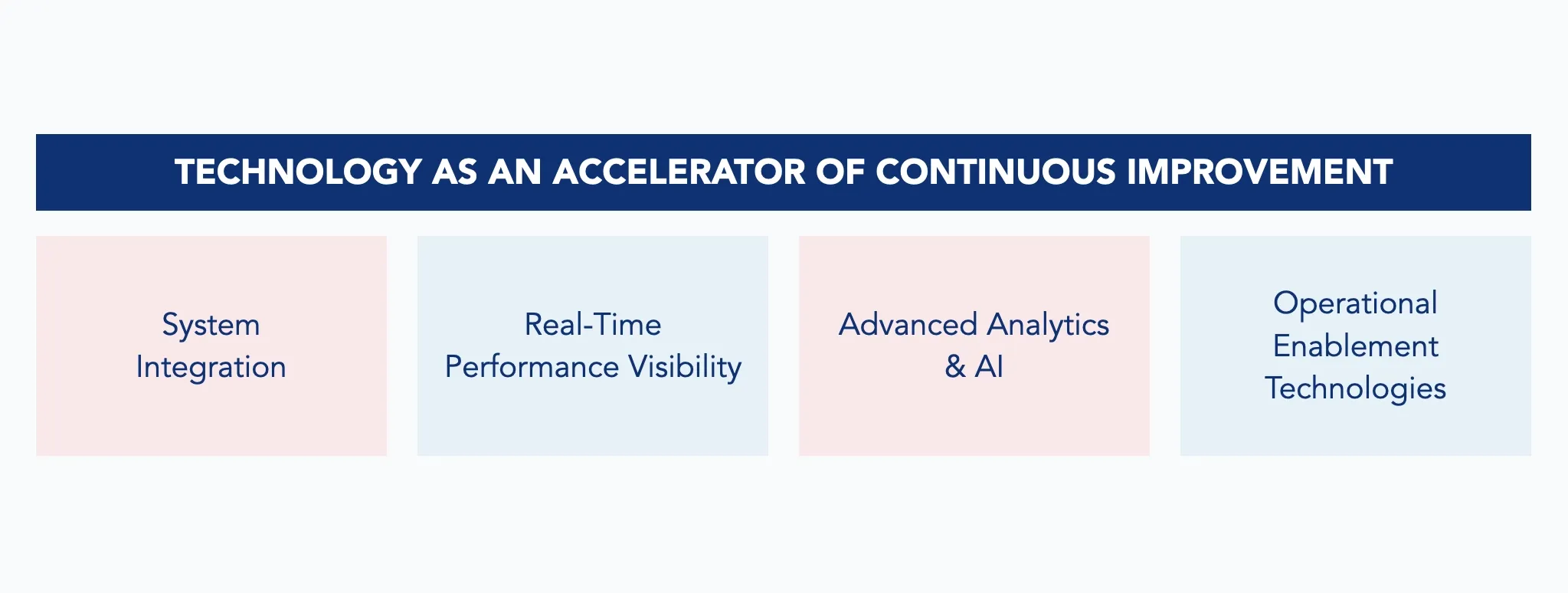
Technology as an accelerator of continuous improvement
Once processes are stabilized and clearly defined, technology becomes a powerful accelerator of continuous improvement. Integrated TMS, WMS, and ERP systems increase coordination and transparency across the logistics network, while emerging technologies such as IoT and automation further strengthen operational control. Real-time shipment tracking and control tower visibility enhance exception management and service reliability. Advanced forecasting and replenishment planning solutions improve demand anticipation, reducing the risk of stockouts and excess safety stock simultaneously.
At the operational level, targeted technologies further increase consistency and productivity. Solutions such as voice picking, barcode and RFID scanning, automated sorting systems, and goods-to-person technologies reduce errors and improve picking accuracy. In transportation, dynamic routing tools, telematics, and fleet management systems enhance capacity utilization and fuel efficiency. When introduced after processes have been simplified and standardized, these technologies scale performance rather than adding complexity.
Figure 4: Technology as an accelerator of continuous improvement
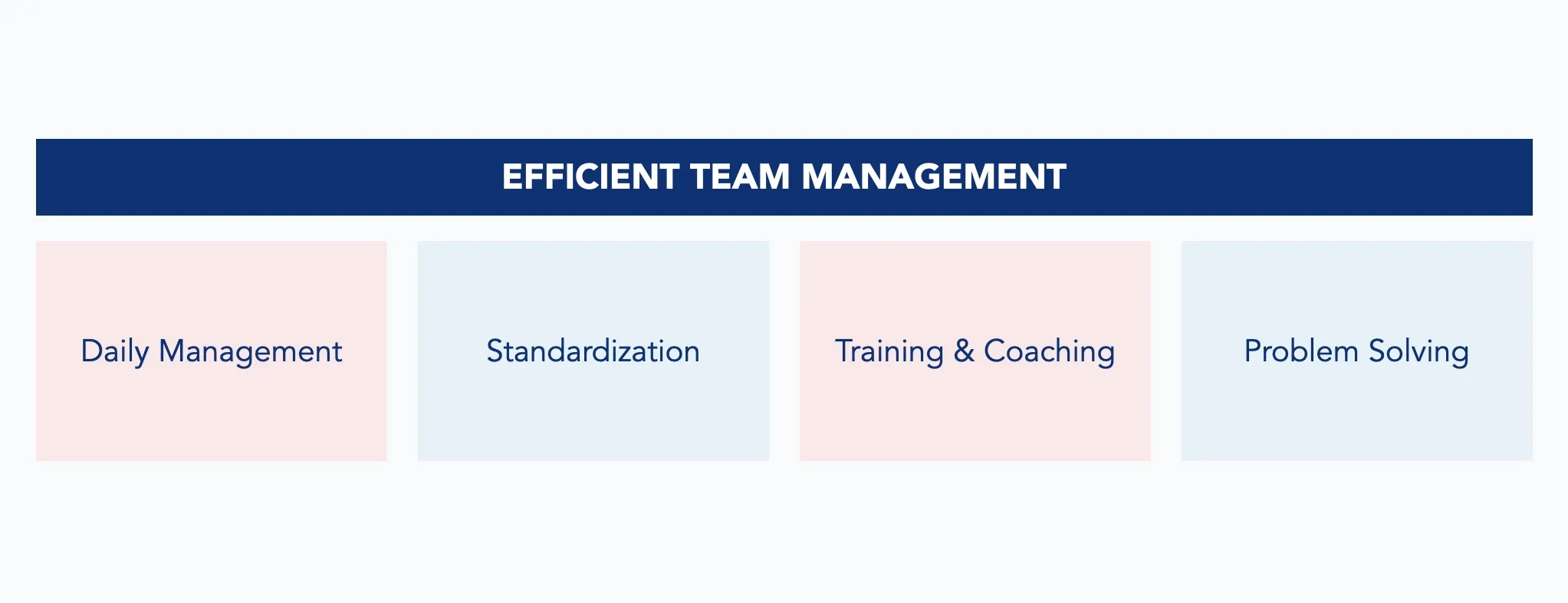
Efficient team management
Sustainable retail logistics performance is ultimately driven by people. While systems, processes, and technology are essential, long-term results depend on a culture of continuous improvement embedded in daily operations. In a Kaizen context, efficient team management goes beyond workforce coordination. It means establishing daily improvement routines in which frontline teams identify waste, solve problems at their root causes, and continuously refine work standards. Visual management, structured daily meetings, and clear escalation processes create transparency and accountability.
Leaders play a pivotal role by acting as coaches rather than solely decision-makers. Through consistent Gemba (the place where value is created) presence, reinforcement of standards, and structured follow-up, they ensure improvements are sustained. By developing problem-solving capabilities within teams, organizations shift from reactive issue resolution to proactive performance improvement, building a resilient, learning-driven logistics operation.
Figure 5: Core pillars of efficient team management
The competitive edge of optimized retail logistics
When retail logistics is optimized through a structured, end-to-end approach, the impact is measurable and strategic. While results always depend on the retail segment and operational maturity, typical improvement ranges include:
-Up to 40%reduction in customer complaints.
-Around 25%reduction in product damage.
-Up to 15%reduction in stockouts.
-Approximately 25%increase in labor and fleet productivity.
-Up to 15%reduction in transportation costs.
-Around 20%reduction in inventory levels, improving working capital and increasing inventory turnover without compromising availability.
-Service level improvements of up to20%, including higher OTIF (On-Time In-Full) performance.
Conclusion: turning logistics into a growth engine
Retail logistics is a strategic lever for growth. In an environment defined by volatility, omnichannel complexity, and rising customer expectations, operational excellence directly shapes profitability, cash flow, and customer loyalty.
Organizations that move beyond reactive firefighting and adopt a structured, end-to-end improvement approach build logistics systems that are both efficient and agile. By stabilizing flow, leveraging data, and embedding a culture of continuous improvement, logistics becomes predictable, scalable, and resilient.
Retailers that treat logistics as a strategic capability and not a cost center gain a measurable competitive advantage. When optimized, logistics does not merely support the business; it accelerates it.
We're not here to fill your inbox with generic tech news. Our newsletter delivers genuine insights from our team, along with the latest company updates.