Exaud Blog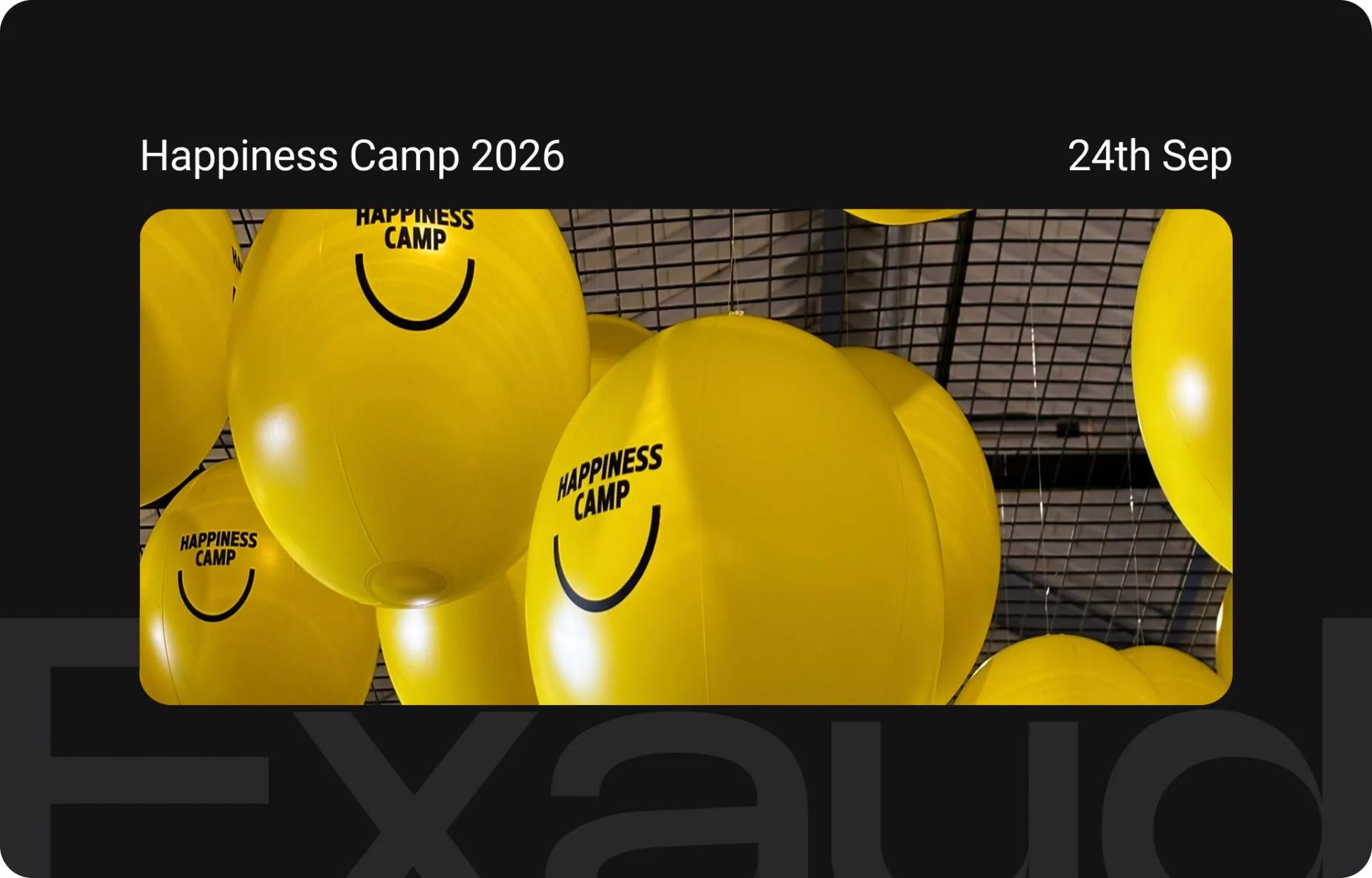
Blog
Where Tech Meets People: Exaud at Happiness Camp 2026
At Happiness Camp 2026, Exaud explored how companies can build high-performing teams without compromising wellbeing and happiness.Posted onby Beatriz MartinsWhy productivity and wellbeing aren't opposites, and what Exaud's HR team brought back from Porto.
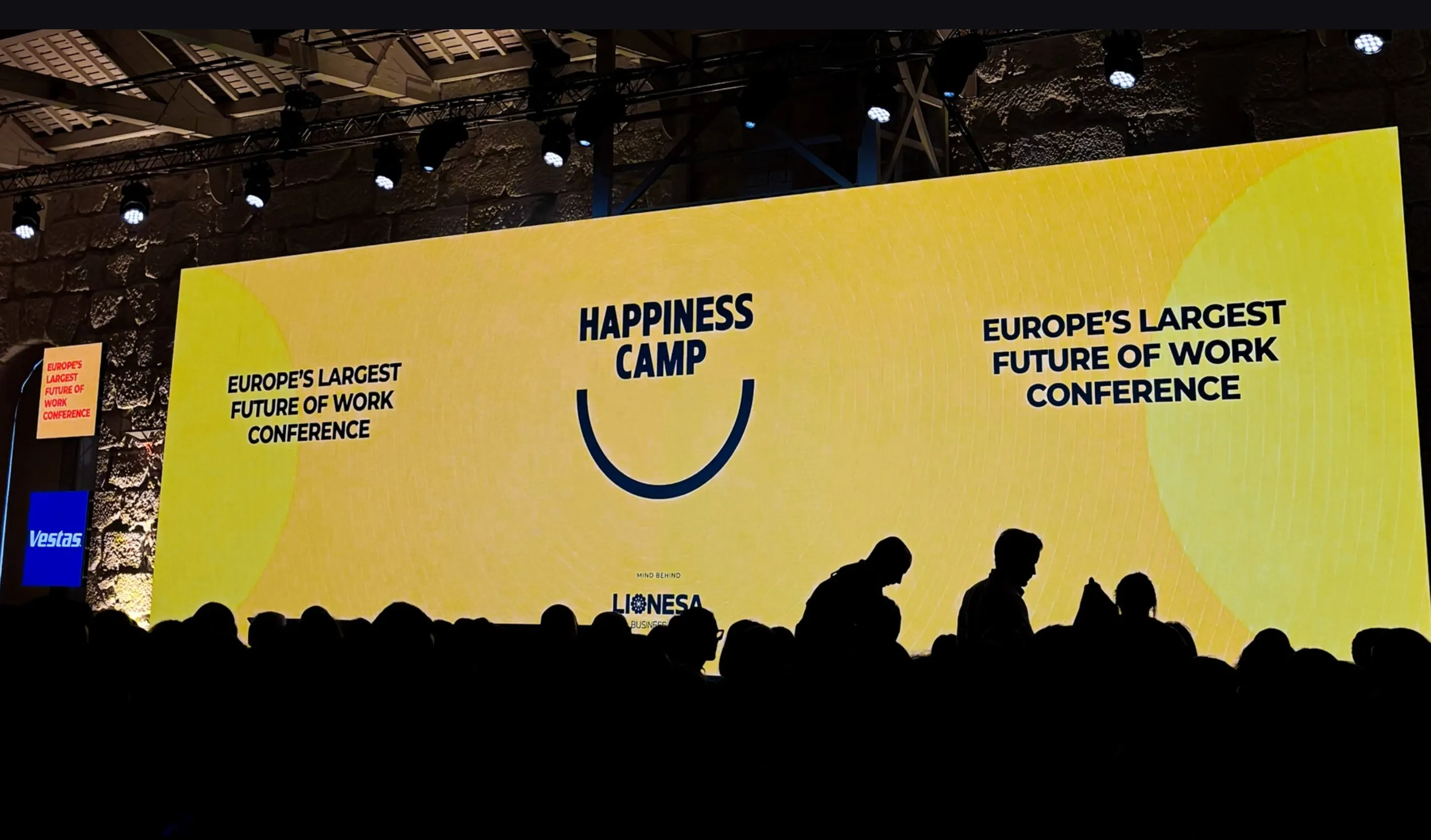
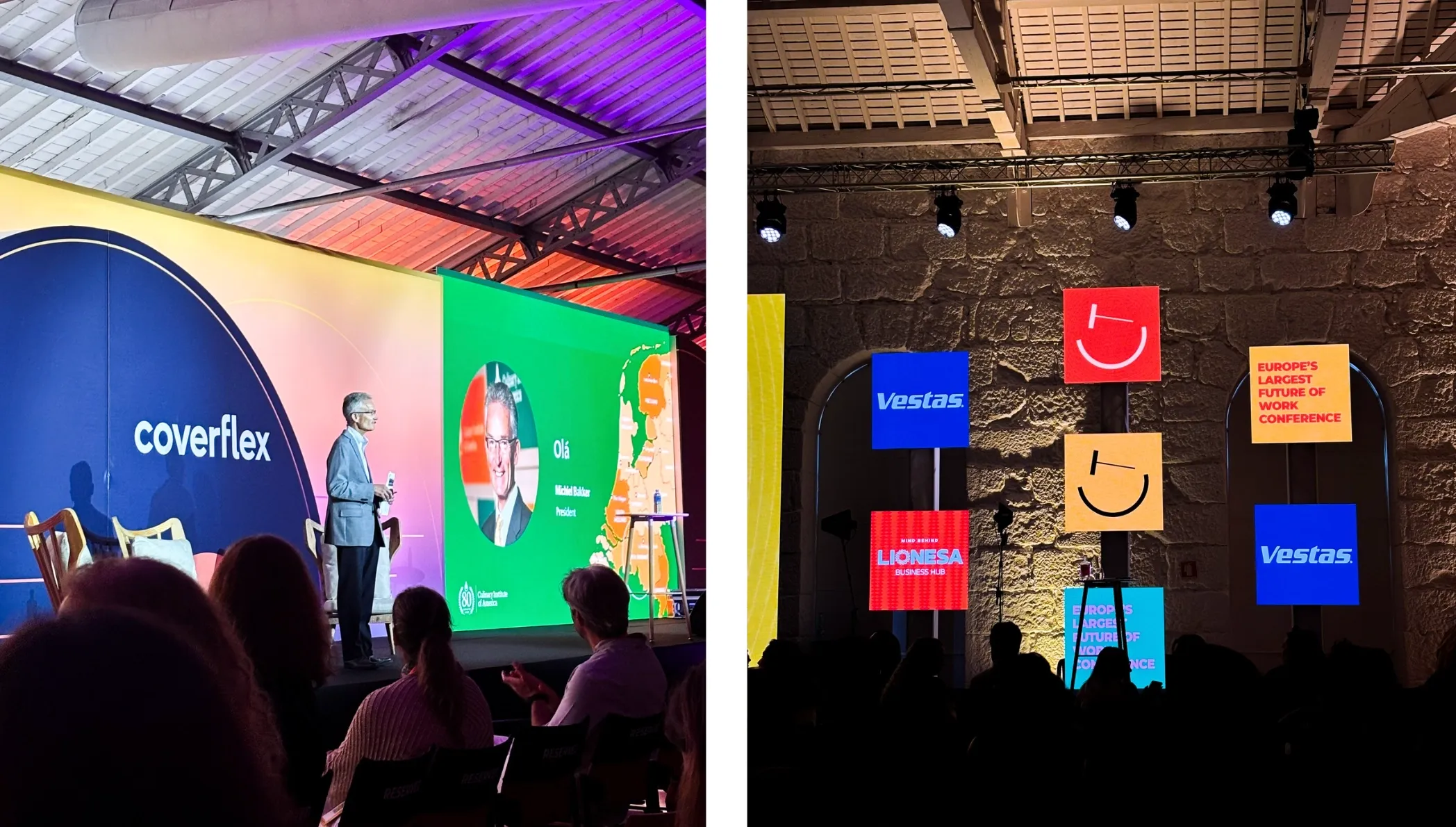
On 24 September, Exaud joined Happiness Camp 2026 at Alfândega do Porto, Europe's largest conference on human sustainability and the future of work. We went with one question in mind: how do you build high-performing teams without compromising their wellbeing and happiness?
In a tech company, where artificial intelligence and constant change are part of everyday work, this question is central to managing our human resources. Here is what we brought back.
We are living through a period of profound change in the relationship between people, companies and technology. That is why the 4th edition of Happiness Camp proposed a new approach: a "reset" in how we think about work models and leadership.
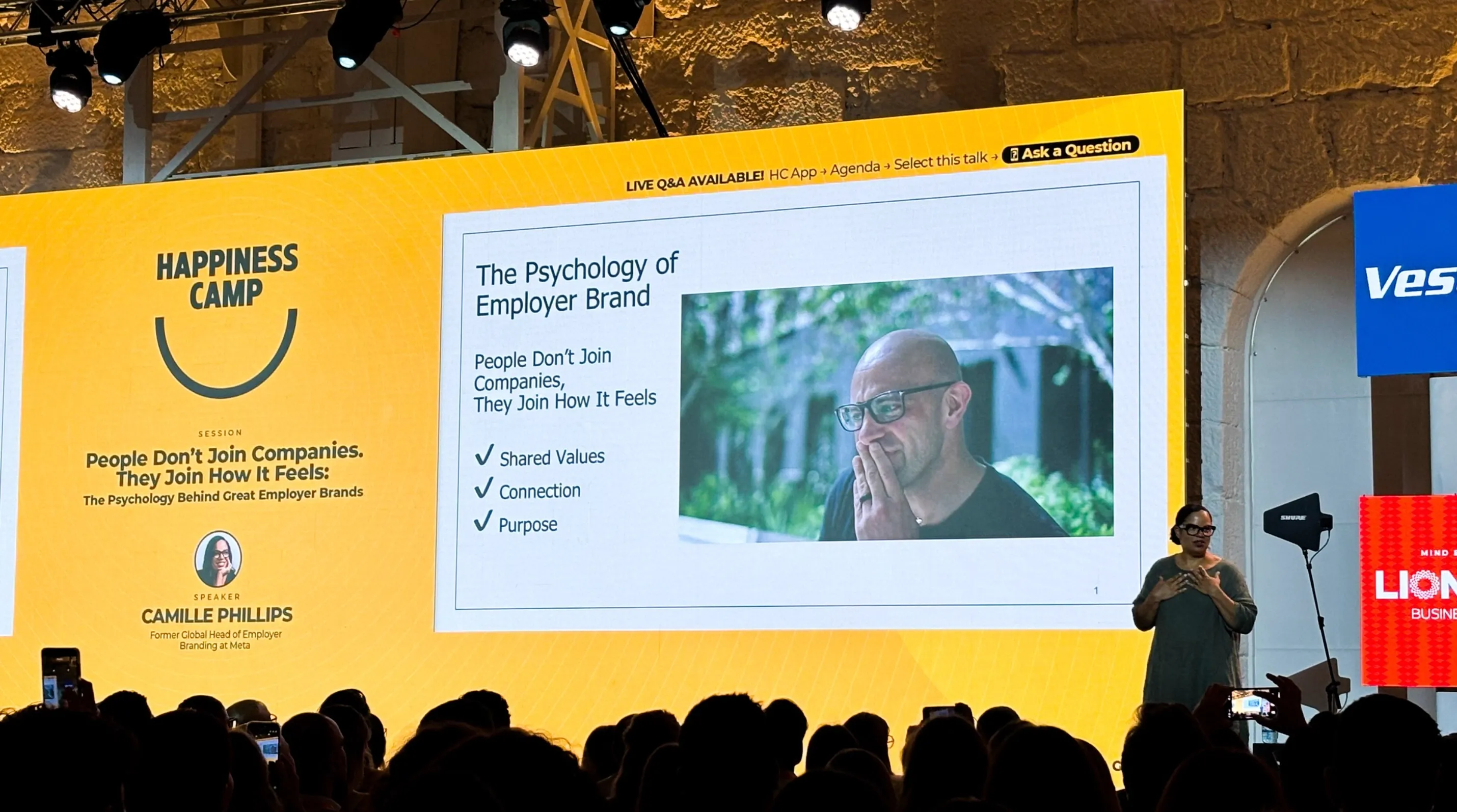
This year's agenda featured names such as Camille Phillips, former Global Head of Employer Branding at Meta; Steven Bartlett, host of The Diary of a CEO; Michiel Bakker, former VP of Workplace Strategy, Innovation and Sustainability at Google; and Mariana Van Zeller, Peabody and Emmy-winning investigative Portuguese journalist, among many others.
Exaud's HR team went looking for ideas we could actually use in our current processes and everyday actions. Across very different talks, on recognition, the future of the office and employer branding, one idea kept coming back: people don't just join a company, they join how it feels to work there.
Some see the workplace, and the work one produces, as something purely rational: a task to tick off the list, with no need for frills or perks. But at the end of the day, is that really the case? Is it impossible to bring wellbeing and happiness together in the workplace?
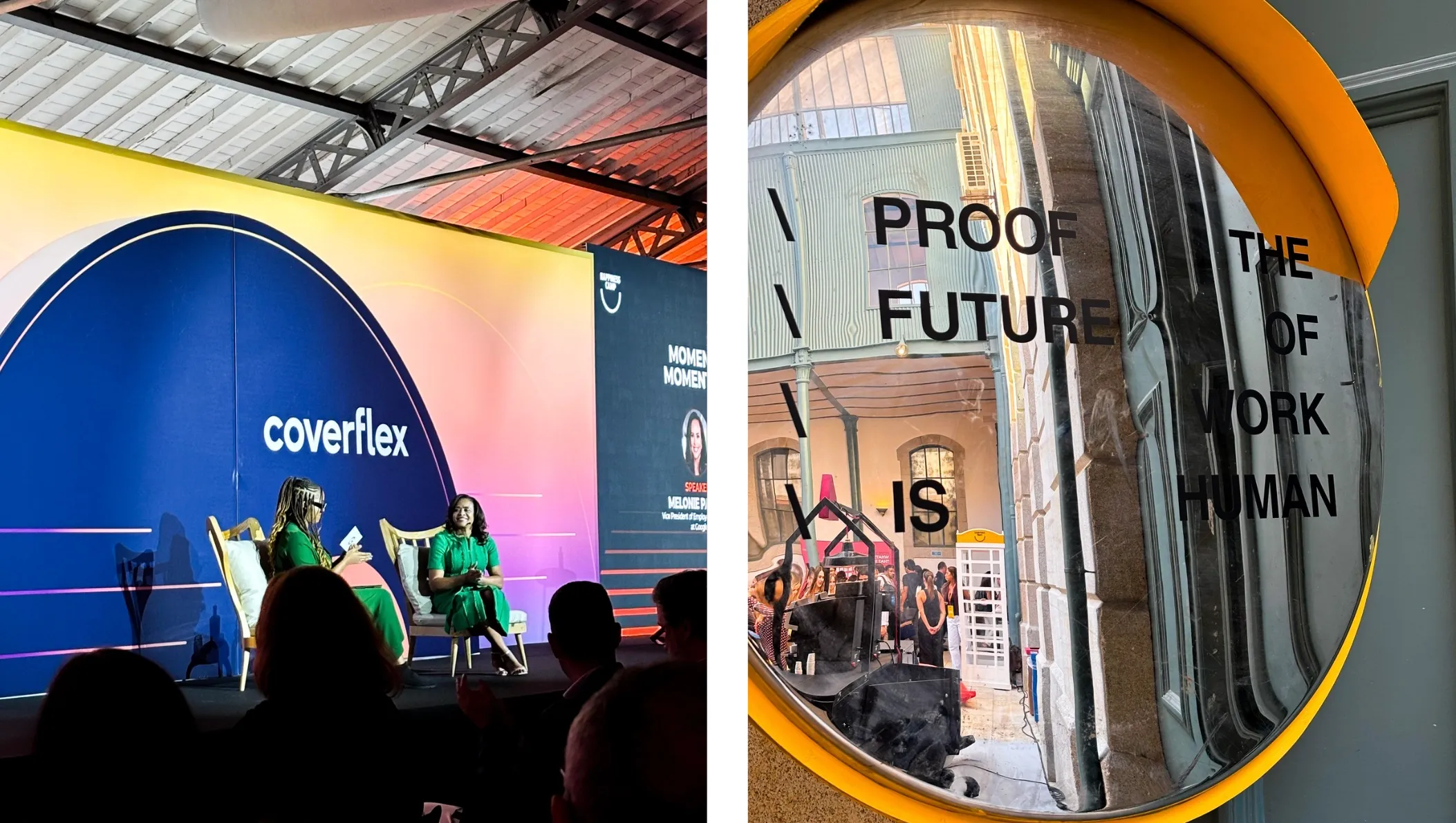
Melonie Parker and Kelsey Robb showed that what truly motivates employees is not team-building events – though these have their place in building cohesion – it is the everyday moments, in which giving our full attention is the most powerful tool for creating genuine connection with the team, whether in person or remotely. At a time when our attention spans keep shrinking, it is crucial to treat each person as if they were the only one standing in line, even from within the four corners of a screen.
With this in mind, the two Google speakers shared a simple gesture that anyone can adopt to strengthen working relationships: thanking someone for their work at the end of the day.
Attention and recognition are the clearest way for people to see their real impact.
In the conversation "The Office Is Not Dead. Boring Offices Are.", with Nicole Senior (Canva), Francis Aquino (Netflix, Headspace and Alo) and Michiel Bakker (Google), the discussion extended to physical spaces. Once again, it became clear that intentionality and attention to detail are what make the commute feel worthwhile.
While the speakers acknowledged that no single recipe works for every company or team, one principle applies universally: each workplace should be designed around the people who use it, with a clear purpose behind it and specific outcomes in mind. It should also be updated and adapted whenever needed.
Now that snacks are simply expected, what really makes the difference is choosing deliberately what fits a specific team, which means reviewing processes and listening to employees, and having the hard conversation about when and why people should work from home or they shouldn't – if people are asked to commute, the office has to earn it through community, culture and experience.
People are motivated by companies whose mission and work express who they are, not only what they do. For engineers, Camille Phillips noted while working on Meta, that usually means working with smart colleagues, joining in interesting projects and the chance to make an impact.
The same happens with potential candidates – the employee value proposition is written by the organization, however the employer brand is earned, not authored, so every signal becomes evidence and trust drives the final choice and candidates form a preference long before they apply.
So, is work purely a to-do list after all? Happiness Camp 2026 suggests otherwise. Whether through a hiring process, a conversation or an inspiring office, people respond to how they are made to feel. None of this requires grand gestures or big budgets, only intention: paying full attention, saying thank you, listening before deciding, and being willing to change what no longer works.
At Exaud, we believe that productivity and wellbeing are not opposites – one builds the other. Want to be part of it? Explore our open positions on LinkedIn or share your CV, and let’s find out if we’re a perfect match.
Related Posts
Subscribe for Authentic Insights & Updates
We're not here to fill your inbox with generic tech news. Our newsletter delivers genuine insights from our team, along with the latest company updates.